Common Color Game Tricks Myths Panalobet
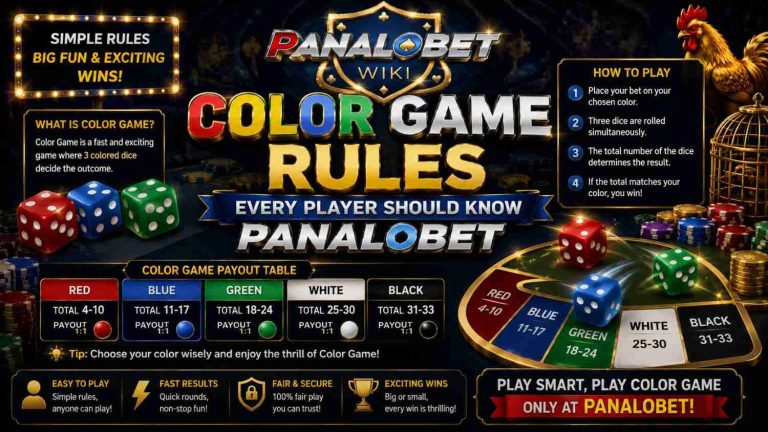
Sites like Panalobet have made old-school games a lot easier to play, and the Color Game is still one of the ones people keep coming back to. It’s quick, simple, and doesn’t require a ton of thinking. The game comes straight out of the classic Filipino perya scene. You basically just try to guess which colors will come up when the dice are rolled. You pick from the usual colors—red, blue, green, yellow, white, or pink—and how much you win depends on how many times your color shows.
Even though the rules are pretty straightforward, there’s no shortage of people sharing “tricks,” systems, and secret methods.Many of these claims fall under the category of Color Game Tricks, yet most of them rest on myths rather than mathematics or verified game mechanics. It doesn’t hold up against the actual odds or how the game really works. Knowing which claims are nonsense can save you from chasing bad advice and help you handle your money a bit smarter.
Myth 1: Patterns in Past Results Can Predict Future Outcomes
A lot of players still believe that studying recent color sequences will give them an edge. They watch for streaks, alternating colors, or a color that hasn’t shown up in a while and then bet like it’s “due.” It feels reasonable at first—after a long run of one color, the other one has to come, right?
It doesn’t work that way. Every round is independent. Whether the game uses simulated dice or a random number generator, what happened before has zero effect on the next result. This is the classic gambler’s fallacy. Streaks and clusters show up naturally in random sequences; they don’t signal anything about what’s coming. Treating the history like a roadmap just creates a false sense of control the game never actually offers.
Myth 2: Betting Systems Guarantee Consistent Wins
You’ll see plenty of talk about systems—doubling after losses, progressive stakes, fixed multi-color spreads—sold as proven tricks that can beat the house.
These approaches can create short winning runs or make the ups and downs feel more manageable, but they don’t change the math. The house edge is built into the payouts. Over enough rounds the expected value stays negative. Systems mainly shift the size and timing of wins and losses. Long losing stretches happen more often than most people expect, and escalating bets during those stretches can wipe out a bankroll fast.
Myth 3: Certain Colors Are Inherently Luckier
Superstition runs deep in Color Game circles. Some players swear certain colors hit more often. Others avoid ones they think are unlucky. Cultural associations (red for energy, green for prosperity, white for neutrality) often steer the choices.
On a properly set-up platform every color has the same chance. Dice faces or their digital versions are balanced, and a certified RNG doesn’t favor one outcome. What looks like a “hot” or “cold” color is usually just short-term variance or selective memory. A color that shows up a lot in one session can go quiet the next with no deeper meaning attached.
Myth 4: Multi-Color Betting Automatically Improves the Odds
Spreading bets across several colors is often framed as a smart way to hit something every round. It does raise the frequency of small returns because more outcomes are covered. The downside is that you’re risking more money overall and the net profit on the winning colors drops.
The house edge doesn’t shrink. You’re just redistributing risk across your bankroll instead of improving the return per unit wagered. You may see fewer dry spells, but over time the results still reflect the built-in advantage.
Myth 5: Secret Formulas or External Tools Can Crack the Game
Online threads regularly push hidden formulas, third-party predictors, or special timing methods that supposedly deliver consistent wins. These claims usually show up in forums or social groups selling “exclusive” knowledge.
Legitimate Color Game results—whether from dice mechanics or regulated random systems—can’t be reliably forecast by external tools. Services promising guaranteed accuracy are almost always marketing, not method. Licensed platforms use systems designed to avoid predictable patterns. Buying into the idea can push players toward extra risk or shady sources.
Practical Perspectives Instead of Myths
Most regular players skip the systems that claim they can lock in wins. They stick to simple stuff they can control. Set a budget before you start. Pick a number you’re fine spending and stop when you hit it. That’s it. It keeps you from tilting after losses or getting carried away when you’re winning.
Knowing the basic odds helps. Once you realize how often any single color should come up at least once across three dice, the game feels less magical and more straightforward. Small consistent bets usually let you play longer than those aggressive plans that try to force big results.
Good platforms treat the Color Game as entertainment. That’s why they offer deposit limits, session timers, and self-exclusion. Use them. If you treat it like a way to kill time instead of a way to make money, you stay in a better headspace.
Why These Myths Persist
The appeal of Panalobet Color Game Tricks lies in the human desire for patterns and control. Random results create streaks and clumps that look meaningful, and our brains love connecting the dots. A short winning run with any approach feels like proof—until longer play shows it’s not.
Marketing piles on too. “Winning strategies,” “proven methods,” that kind of language is everywhere because it gets clicks. A bit of doubt is healthy.
A Clearer Way to Enjoy the Game
Join Panalobet and similar sites just offer a fast, colorful game with some cultural roots. It works best when you accept the randomness. Chasing predictable patterns, lucky colors, secret formulas, or guaranteed systems usually just leads to frustration.
Every round is separate. No staking plan changes the house edge. Probability decides things, not superstition. Budget limits, time limits, and a basic grasp of how the game works beat any claimed Color Game Tricks.
Simplest approach is still the best: play for fun, stick to the limits you set, accept that chance is a big factor, and stop when you’re done. That keeps the Color Game as entertainment instead of something you’re trying to solve.