
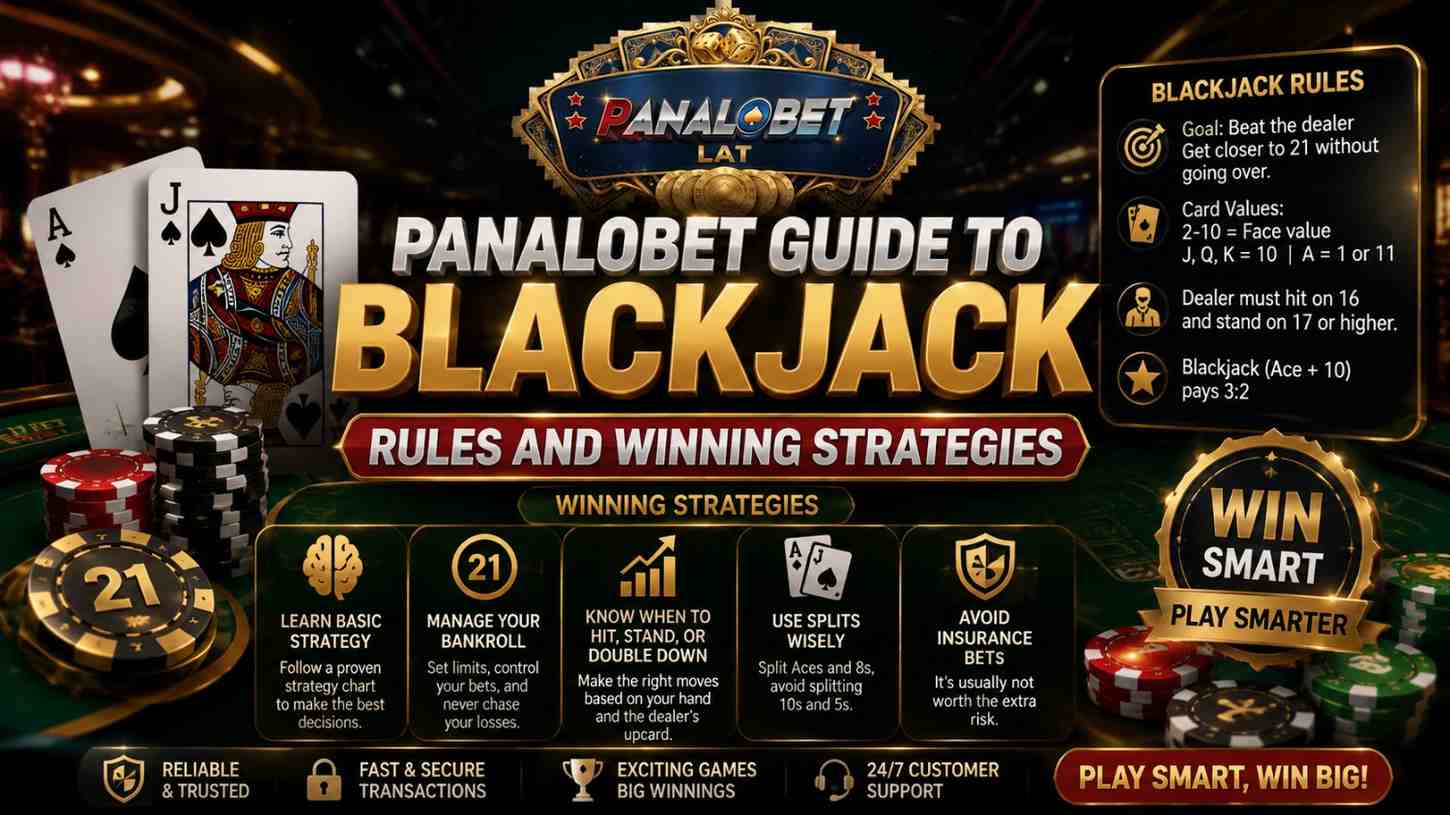
Panalobet Guide to Blackjack Rules and Winning Strategies
If you’ve ever stood on a casino floor—or navigated the digital tables at a place like Panalobet—you know that the Blackjack tables have a different energy than the slots. The slot machines are all flashing lights and desperate hopes for a jackpot that’s statistically impossible to hit. But the Blackjack table? That’s where the actual work happens. It’s the only place in the building where you can look at the dealer and realize, with a bit of effort and a lot of discipline, you aren’t just playing a game of chance. You’re playing a game of math.
Most people who sit down to play this game are doing it wrong. They treat it like a gut-feeling contest. They think they can “sense” when a card is coming, or they get terrified when they hold a 16 and decide to stand, or they get greedy and split their 10s. If you want to stop lighting your money on fire, you have to stop playing like a tourist. You have to strip away the “lucky” mindset and start looking at the cards for what they really are: variables in a long-term equation.
The Objective: It’s Not About 21
Here’s the first thing you need to unlearn: you are not trying to get 21. People obsess over the number 21. They think getting as close as possible is the goal. But if you walk into the game with that mindset, you’re going to bust—hard.
The real goal? Beat the dealer. That’s it. If the dealer busts with a 22 and you have a miserable 13, you win. Your 13 is a masterpiece if it’s enough to outlast the house. This is a game of attrition, not accumulation. Your only opponent is the person in the fancy uniform dealing the cards, and they have one massive disadvantage: they have to play by a rigid, unchanging set of rules. They hit on 16. They stay on 17. They have no choice. They are a robot, and you are a human who can make smart decisions. That is your edge.
How to Play Without Being an Amateur
If you’re new to the site, the mechanics are simple enough, but you need to internalize them so they become muscle memory. You get two cards; the dealer gets one up and one down.
Then comes the “fun” part—the choices.
- Hit: Take another card.
- Stand: Don’t take anything.
- Double Down: Double your bet for exactly one more card.
- Split: Take a pair and turn it into two separate hands (which costs you extra).
That sounds easy, right? But the pressure starts the second those cards are dealt. The amateur looks at their hand and thinks, “What do I want to happen?” The pro looks at their hand, looks at the dealer’s upcard, and asks, “What is the highest percentage move here?”
The “Basic Strategy” Isn’t Just a Suggestion
There’s a thing called “Basic Strategy.” You can find charts for it all over the internet. These aren’t opinions. These are the results of millions of simulated hands, played out by computers that don’t get hungry, tired, or emotional.
When your gut tells you to hit on a 16 against a dealer’s 6, your gut is dead wrong. Your brain is going to scream that you need a bigger number. But the math knows that the dealer has a high chance of busting. If you hit, you’re just throwing yourself into the fire. The hardest skill in Panalobet Blackjack isn’t knowing the rules—it’s having the self-control to make the “boring” play when your instincts are telling you to do something reckless.
The Traps That Bleed Your Bankroll
You will see people making mistakes constantly at the tables. Don’t be that person.
- Never split 10s. You already have a 20. It is one of the best hands in the game. Trying to make it better is pure greed, and greed is how you end up with two 15s instead of one 20. Leave the 20s alone.
- The Insurance Scam. When the dealer shows an Ace, they’ll offer you “Insurance.” It sounds like a great deal, doesn’t it? A way to protect your bet? It’s a sucker bet. The house edge on insurance is massive. It’s just another way for the house to skim more money off your stack. Decline it every single time. It doesn’t matter how “lucky” you feel; the numbers are firmly against you.
- Splitting 8s. A pair of 8s is a 16. That’s the “dead zone”—it’s too high to hit without risking a bust, but too low to stand with any confidence. Always split them. It’s your best shot at saving a bad hand.
Managing Your Bankroll: The Real Secret
Even if you play perfectly, you will lose hands. You will lose sequences of hands. You might even lose for an entire hour. That’s the variance of the game. If you can’t handle a losing streak without getting angry, you shouldn’t be playing.
The players who go broke aren’t the ones who make a bad call; they’re the ones who go on “tilt.” They lose a hand, get frustrated, and try to win it back by doubling their next bet or playing reckless hands. That is exactly what the house wants. They want you emotional. When you’re angry, you’re not calculating. When you’re not calculating, you’re just a donor.
Curious about what else is available? Many players often ask what are the best online casino games beyond the tables. Whether you are looking for slots, poker, or live dealer experiences, remember to check for what is a casino welcome bonus when you Join Panalobet to ensure you maximize your starting bankroll.